The pod question
Your Nespresso machine was never the problem
The ceiling on pod coffee is set before the machine turns on. It is decided by the six grams sealed inside.
Nobody buys a pod machine expecting cafe coffee. You buy it because it is 6:40 in the morning, because it is quiet enough not to wake the house, and because the alternative is a grinder, a scale, a kettle and eleven minutes you do not have.
And on those terms the machine delivers. It is a genuinely good piece of engineering. It pierces, it pressurises, it hits the same temperature every time. Nespresso solved the hard part of consistency two decades ago and has been refining it ever since.
Which makes the usual complaint about pod coffee slightly misdirected. People say the machine makes it taste thin, or flat, or a bit burnt. The machine is not doing that. The machine is faithfully extracting exactly what it was handed.
The interesting question is what it was handed. A pod machine cannot brew coffee that is not inside the pod, and it cannot restore freshness that was lost before the pod was sealed. Those two limits are set upstream, in a factory, weeks or months before you press the button. Everything that follows on this page is about those two limits, and about what happens if you attack them instead of the machine.
01 The doseYou cannot extract coffee that is not in the capsule
Start with the number nobody prints on the front of the box. A Nespresso Original pod contains roughly 6 grams of ground coffee. A K-Cup holds around 9. A Cometeer capsule is built around roughly 18 grams. These are Cometeer's published comparison figures, and they appear on both their How It Works page and their Nespresso comparison page.
For scale, a barista pulling a double espresso in a cafe typically starts from something in the high teens of grams. So the gap between a pod and a cafe shot is not subtle, and it is not a matter of technique. It is roughly a factor of three in raw material.
Coffee per serving
Grams of coffee the format is built around, as published by Cometeer.
Figures as published by Cometeer on cometeer.com/pages/how-it-works and on their Nespresso comparison page, August 2026. Bars are drawn to the stated grams.
This is why so much pod coffee arrives tasting hollow. To get a normal sized cup out of a small dose, you have to run more water through less coffee. Push a little further and you start pulling the bitter compounds that a shorter, denser extraction would have left in the grounds. The machine is not making a mistake. It is being asked to do something arithmetic will not allow.
Cafes never face this problem, because a cafe is not trying to fit your coffee into a container the size of a bottle cap.
02 The clockThe second limit is a clock that starts the moment coffee meets air
Cometeer's own explanation of freshness is blunt about the chemistry, and it is worth reading as mechanism rather than marketing. Whole beans, they write, start to go stale as soon as they are exposed to oxygen. Ground coffee loses its freshness within hours of being ground. And in their founding story they add the part most people never think about: once coffee is actually brewed, its most delicate aromas begin to disappear within minutes.
So there are three separate windows, and they close at very different speeds. Beans measure in weeks. Grounds measure in hours. Brewed coffee measures in minutes.
Now trace a pod through that. The coffee is roasted, then ground, then sealed, then boxed, then shipped, then warehoused, then shelved in a shop, then bought, then put in your cupboard, and only then brewed. Sealing helps. It does not stop time, and it certainly does not reverse anything that happened between the grinder and the seal.
Where the freshness goes
PodThe coffee is ground early and brewed last, so the fastest clock of the three runs for the whole journey.
CometeerThe coffee is brewed first and frozen within seconds, so the journey happens after the flavour is already captured.
That inversion is the entire idea, and it is worth stating plainly because it sounds like a gimmick until you see what it is solving. Cometeer does not try to keep grounds fresh for six months. It brews the coffee at the factory, at the moment the coffee is best, and then stops the clock.
03 The mechanismBrew it once, properly, then freeze it in seconds
Cometeer says it spent more than five years and millions of dollars building its extraction system before it sold anything. Every variable is controlled, from grind size to water chemistry to temperature stability. That is a strange amount of effort to put into brewing, until you realise they only get one attempt: they are brewing the cup you will drink in four months.
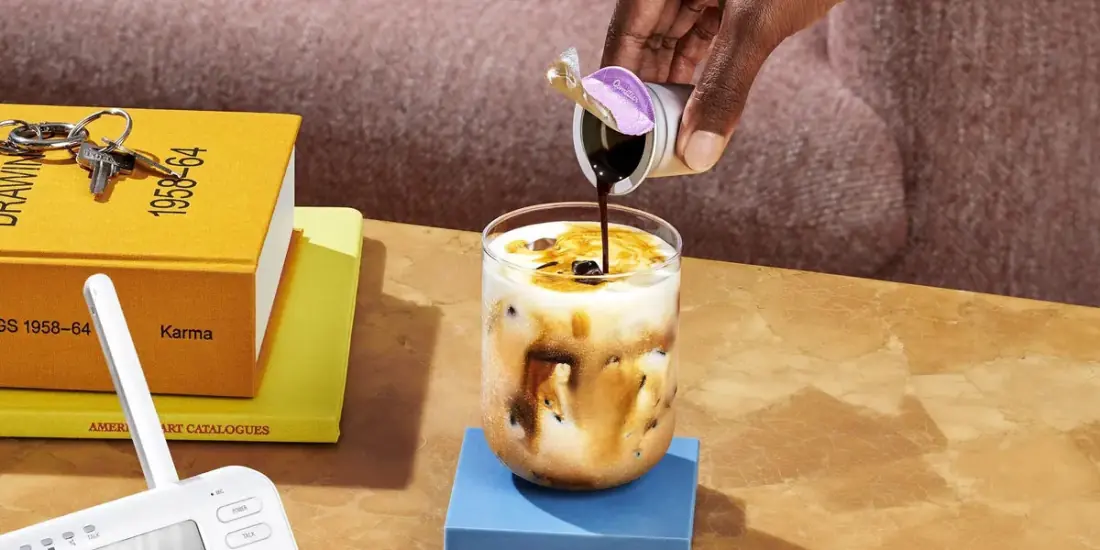
Then the part that gives the company its name. Instead of serving the coffee hot and watching it fade, they flash freeze it within seconds, at 321 degrees below zero Fahrenheit. Freezing that fast halts oxidation and holds the volatile aromatic compounds in place instead of letting them evaporate into a room.
What is actually inside the capsule
This is the point where most people file Cometeer under instant coffee, and it is worth being precise, because Cometeer is unusually specific about the distinction.
Freeze dried coffee is brewed and then dehydrated, and you add the water back later. Concentrate has water removed to make a syrup. Both take water out. Cometeer says it never removes water at all. The capsule holds fully brewed coffee at roughly 13.5 percent total dissolved solids. Drip coffee typically sits around 1.3 to 1.5 percent. Espresso averages 8 to 10.
Strength, as brewed
Total dissolved solids. How much of what you are drinking is coffee rather than water.
Figures published by Cometeer in The Founding Story of Cometeer. Melting a capsule into 6 to 8 ounces of water brings it back to drinking strength. Nothing is added, nothing is taken away.
That number is why the capsule is small and the cup is normal. You are not being handed a weak brew to be topped up. You are being handed a very strong brew that has been paused, and the water you add at home is the same water the barista would have added at the machine.
The three year shelf life is the part that sounds like a trick and is actually the mundane consequence of the first two. Nothing is preserving the coffee. It is simply too cold for the reactions that ruin coffee to proceed at any useful speed.
04 The brew pathThe argument Cometeer is currently making in public
There is a second line Cometeer runs alongside the taste argument, and it is worth reproducing accurately because it is their claim, not ours. In an ad running right now, they write: most Nespresso drinkers do not realise their hot coffee runs through a plastic brew path.
The brew path is simply the route the hot water takes from the reservoir to your cup. On any pod machine there is one, it contains plastic components, and hot water passes through it every single time. Cometeer's point is not that this is dangerous. Their point is narrower and harder to argue with: they do not have one. There is no machine, so there is no path, so there is nothing to descale, replace or think about.
What the water passes through
Pod machineA fixed appliance on the counter, with parts that need descaling and eventually replacing.
CometeerThe brewing already happened. What is left is pouring liquid onto liquid.
The packaging follows the same logic. Cometeer capsules are aluminium, which they describe as fully recyclable: rinse it and put it in the recycling. And because the capsule contains liquid coffee rather than grounds, there is nothing to separate out first. Cometeer says it sends the spent grounds from its own brewing to a local composting company, more than a million pounds a year.
None of that matters unless it wins a blind tasting
A mechanism is a story. What settles the argument is whether people who already like their pod coffee prefer something else when they cannot see the label.
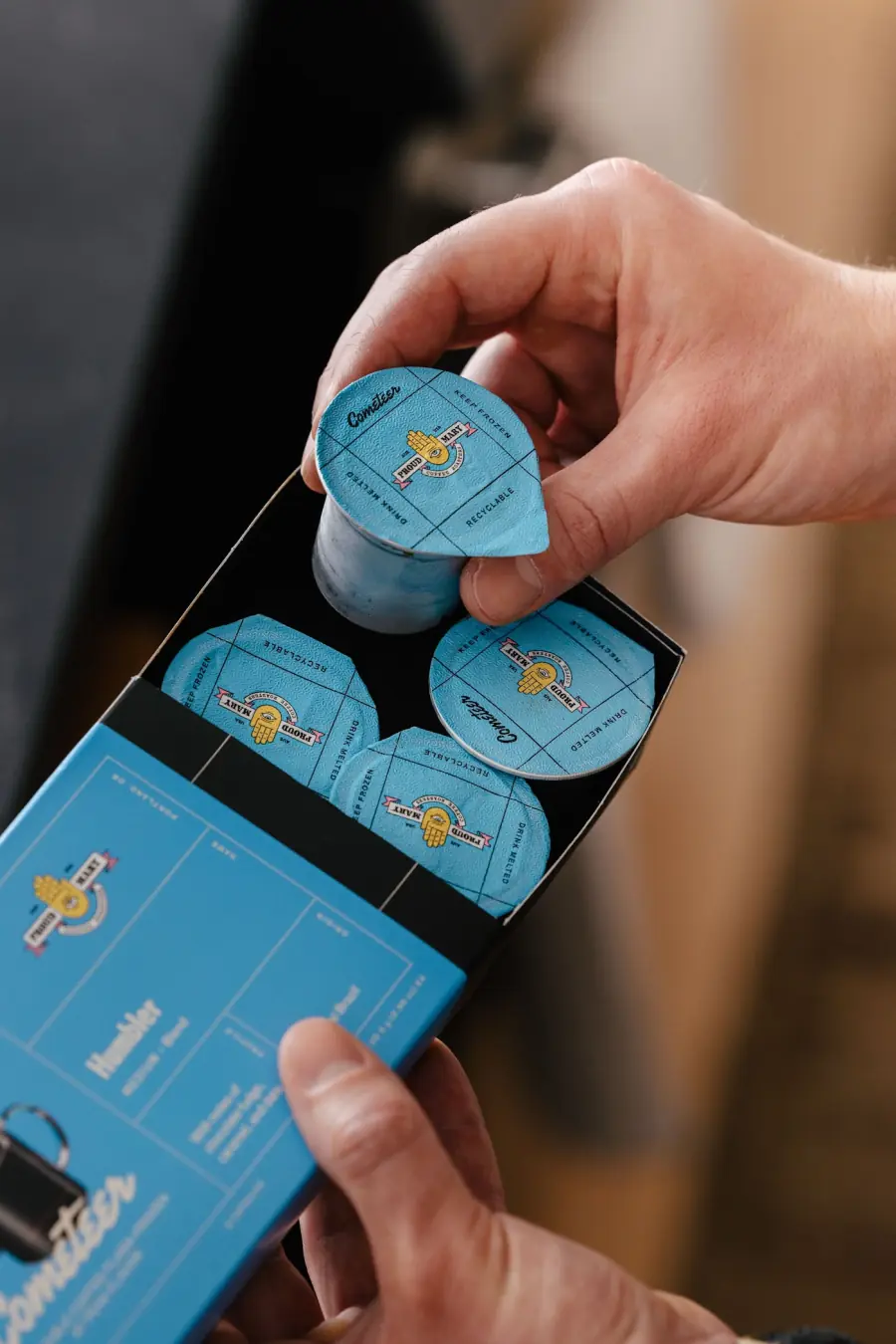
Cometeer publishes the result of exactly that test. They took Nespresso drinkers in New York, ran a blind comparison conducted by a third party, and put their Companion blend against Nespresso's Vertuo Melozio, one of Nespresso's best sellers. Their published figure: Cometeer preferred two to one.
Nespresso Vertuo Melozio
1
A Nespresso best seller, chosen by Cometeer as the comparison.
Cometeer The Companion
2
Preference ratio published by Cometeer from a blind test of Nespresso drinkers in New York, run by a third party.
There is a second data point they like to tell, and it is a better one, because the person had every reason to reach the opposite conclusion. Cometeer says the former president of Nespresso took the same side by side taste test. He invested.
Then there is the group that is hardest to impress and easiest to verify, because they publish under their own names.


David Chang, the chef, puts it in the most practical terms of the three. He has always loved pour over coffee, he says, but did not have the time or the expertise to make it correctly. That is the actual job to be done here, and it is the same job a pod machine is doing. The difference is only in what arrives in the cup at the end of it.
What switchers say
★★★★★
We were Nespresso drinkers for 8+ years and now, because of an episode about plastic on DOAC, we are Cometeer drinkers. It really does taste better!
Raina T.
★★★★★
One order from Cometeer and that's all it took for me to put my Nespresso machine away!
Krystal W.
★★★★★
Just made the switch from Nespresso to Cometeer and I will not be looking back. For anyone who truly enjoys coffee, there is no comparison.
Christina G.
★★★★★
It puts my Nespresso to shame.
Ryan J.
Customer reviews as published by Cometeer on get.cometeer.com/lps/nespresso, read August 13, 2026.
See the box the switchers start with Light, medium and dark roasts in one order 06 The tradeWhat you give up, honestly
Every format buys an advantage by paying for it somewhere else, and a page that does not say where is not worth reading. Here is the bill.
- It lives in your freezer. A box takes real freezer space, and it has to stay frozen. That is a genuine constraint if your freezer is already full.
- It arrives on dry ice. Which means delivery is an event you have to be roughly present for, not a parcel that sits in the hall for two days.
- Hot is instant, iced is not quite. For a hot cup you drop the frozen puck straight into hot water. For iced, Cometeer's own instructions are to thaw the capsule first, overnight in the fridge or about five minutes submerged in water.
- You cannot pick one up on the way home. There is no aisle in a supermarket where you replace a box you forgot to order.
- It is not the cheap option. It is cheaper than a cafe and dearer than a supermarket pod. If price per cup is the only axis you care about, this format will lose.
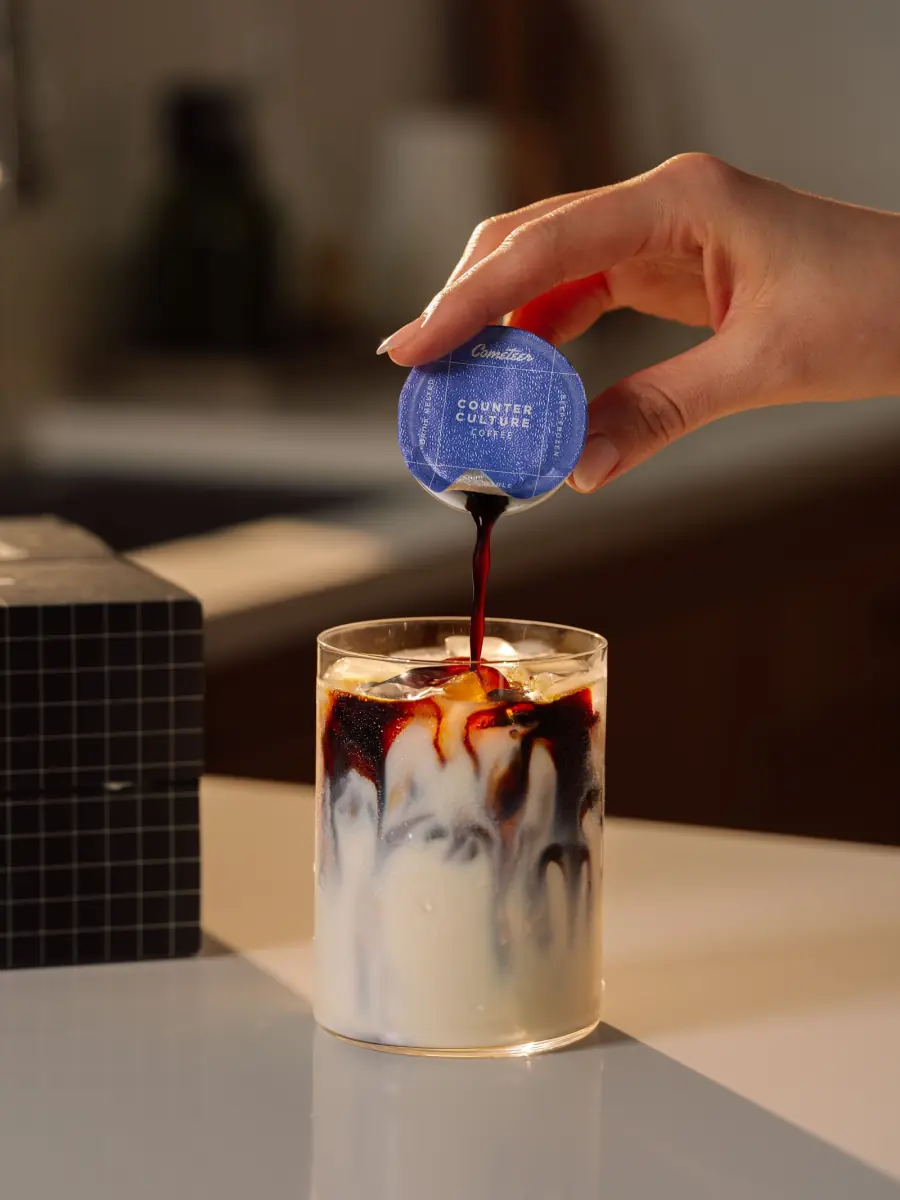
What you get in exchange is narrow and specific: there is no machine to buy, descale, replace or find counter space for, and the coffee in the cup was brewed by people whose entire job was getting that one extraction right.
| Cometeer | Nespresso Original | Local cafe | |
|---|---|---|---|
| Coffee per serving | about 18 g | about 6 g | about 18 g |
| Hardware needed | None | Machine, about $130 and up | None, but you have to go there |
| Freshness | Brewed, then frozen the same day | Ground, packed, shipped, then brewed | Brewed to order |
| Noise | Silent | About 70 dB | Not your problem |
| Drinks | Hot, iced or latte from the same capsule | Dispenses hot | Anything on the menu |
Comparison figures as published by Cometeer on their How It Works and Nespresso comparison pages, read August 13, 2026. The cafe column is added here for scale.
07 The mathsWhat it costs to find out
The comparison people usually make is Cometeer against the pod, which flatters the pod. The comparison Cometeer makes is Cometeer against the cafe, which flatters Cometeer. Both are true and neither is the number you actually need, so here is the plain one.
A box is five different coffees, eight capsules each, forty cups. Bought outright that is $105, which works out at $2.63 a cup. On a subscription the first box is $59, or $1.48 a cup, and it settles at $80 after that, which is $2.00 a cup. There is no machine to buy at any point.
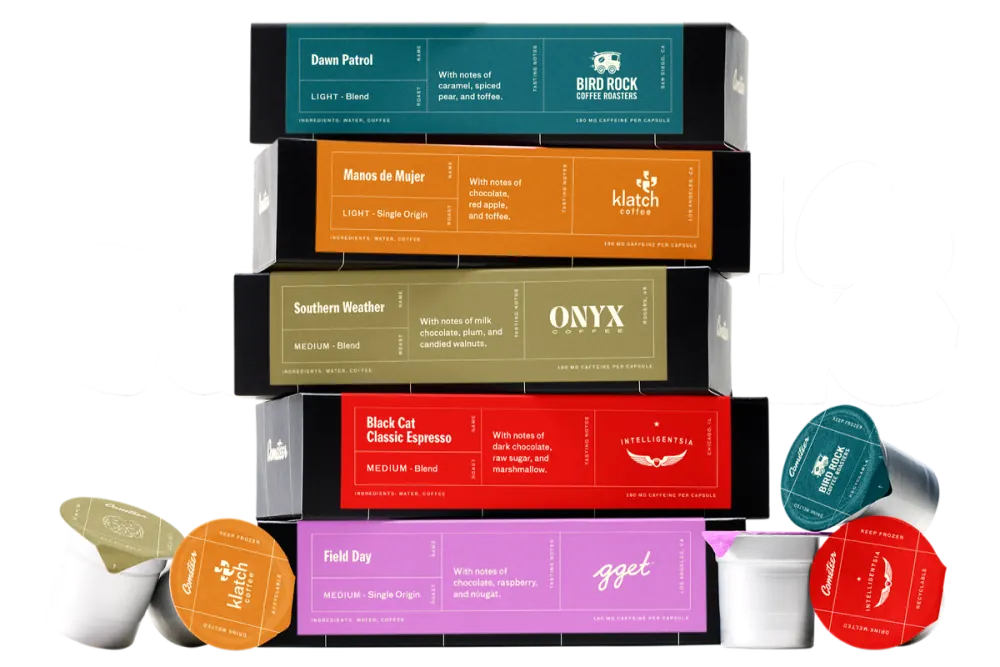
Mixed Roast Curated Box
Light, medium and dark roasts, chosen by Cometeer and refreshed monthly
$105 one time · $59 first subscription box
- 5 coffees, 8 capsules each. Forty cups per box, hot, iced or as a latte.
- No hardware. Water is the only other thing required.
- Ships frozen on dry ice. Goes straight into your freezer on arrival.
- Happiness Guarantee. Cometeer's published promise: it is your preferred capsule in a taste test, or your money back.
That last line is the part worth taking seriously, because it is the whole argument reduced to something falsifiable. Cometeer is not asking you to believe the gram counts, or the freezing temperature, or the blind test. It is asking you to run the test at your own counter, against the machine you already own, and it is carrying the downside if you disagree.
The questions that come up next
Is this instant coffee?
No, and Cometeer is precise about why. Instant and freeze dried coffees are brewed and then dehydrated, and concentrate has water removed to make a syrup. Cometeer says it never removes water at any stage. What is frozen is fully brewed coffee.
Do I need a machine?
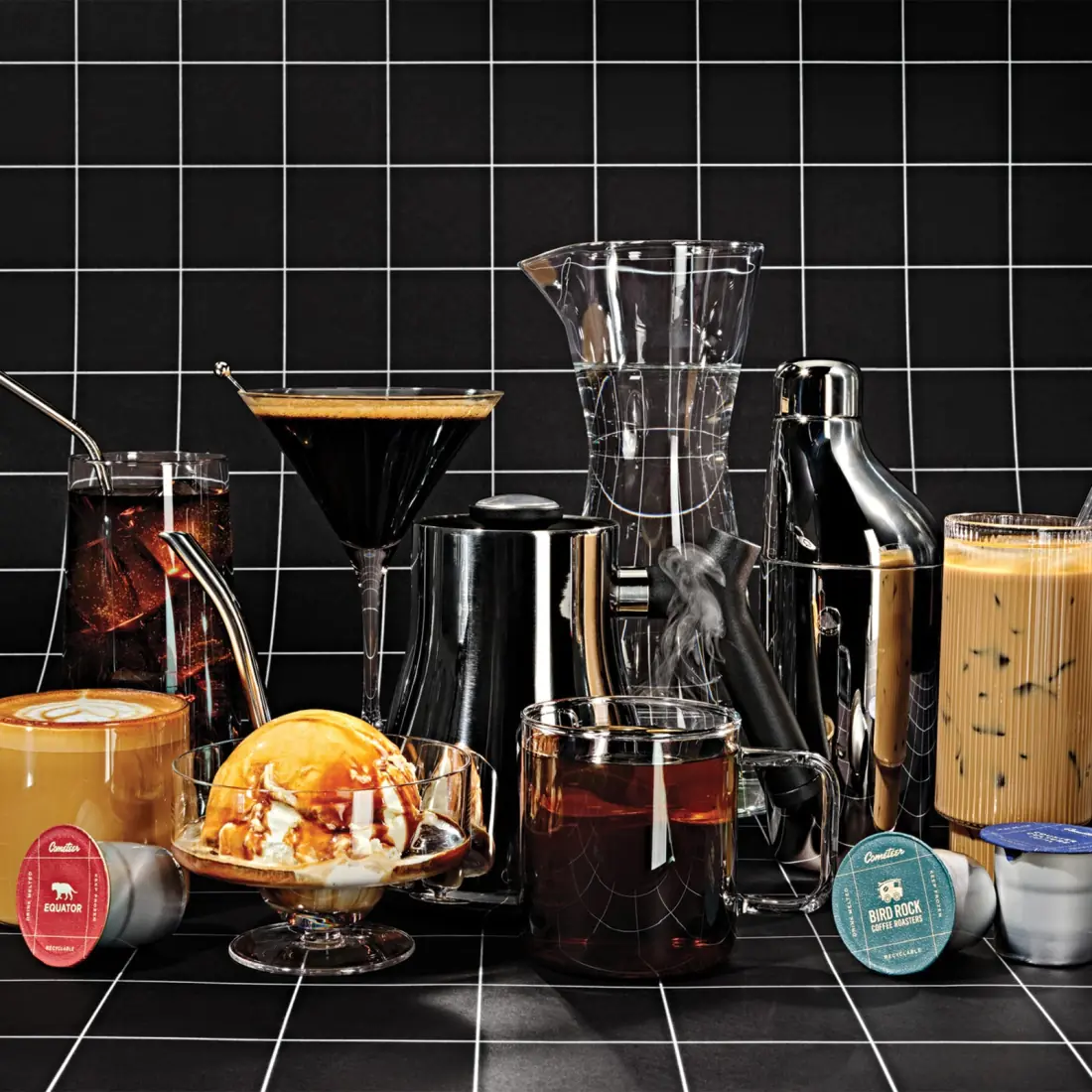
No. Peel the lid, add 6 to 8 ounces of hot water or milk, stir. For a hot cup the frozen puck goes in as it is. For iced, thaw it first.
How long does it keep?
Cometeer publishes 36 months frozen, with no preservatives, and lists two ingredients: coffee and water.
What happens to the capsule?
It is aluminium. Rinse it and put it in the recycling. There are no grounds inside to separate out first.
Whose coffee is it?
Both. Cometeer runs boxes from outside specialty roasters including Counter Culture, Intelligentsia, Equator, George Howell, Onyx and Joe, and it now roasts its own line as well, sourced through direct partnerships with farmers.
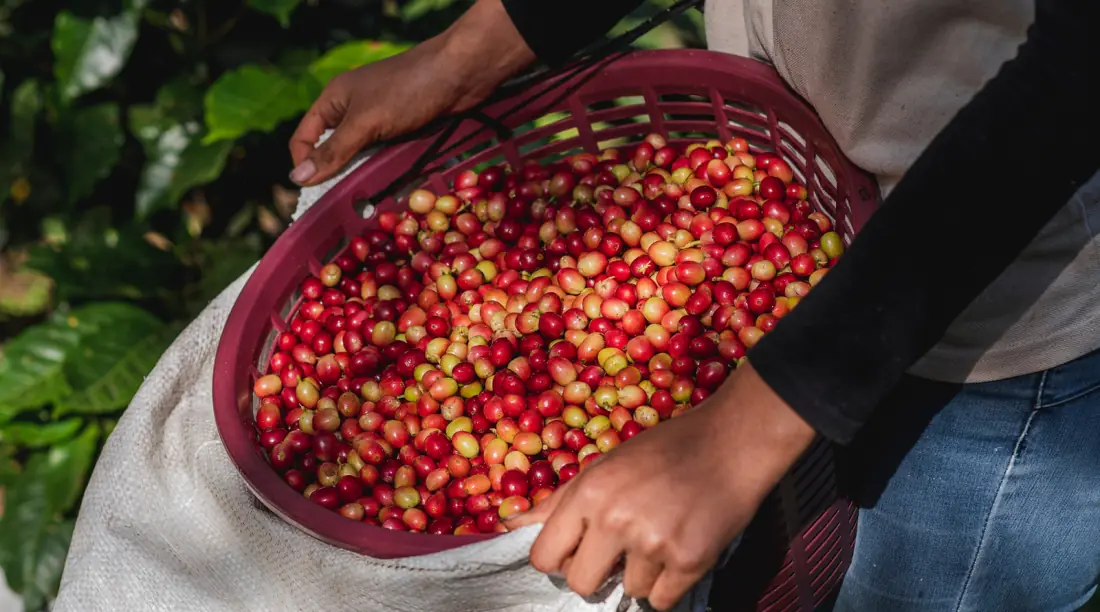
Which brings the question back to where it started. Pod coffee has spent twenty years being judged on the machine, and the machine was the wrong defendant. It was only ever as good as the six grams it was handed, and no amount of pressure, temperature or engineering was going to change that.
Move the brewing to somewhere it can be done properly, freeze the result before it has a chance to fade, and the machine becomes what it probably should have been all along: unnecessary.
Try it against your own machine Mixed Roast Curated Box · forty cups · ships frozen